Tuesday, November 15, 2011

He Loves Me He Loves Me Not


What is our purpose for life? According to Jacob Palmer (Ryan Gosling) in the movie “Crazy Stupid Love,” life is about seeing how many women he can take home with him. This film is an accurate depiction of love and heart break. Cal, played by Steve Carell, is introduced to his wife’s affair and request for divorce. Broken, Cal spends many nights at the bar to help wash his hurt down with alcohol. It is his nights spent at the bar that he becomes introduced to Ryan Gosling’s character. Jacob is this smooth, hansom, lady’s man who spends his nights getting any girl he desires. Upon noticing Cal’s pitiful attire and despondent disposition, he approaches him with a proposition to change him into a lady’s man. Jacob is perfectly content with his life, which consist of different women coming and going every night- or is he? Jacob becomes complacent in his lifestyle for a while, but things change when he meets this girl who shows genuine interest in him as a person and not as a physical being. Jacob discloses his unhappiness and his embarrassment to admit how he desperately seeks intimacy with a female. He falls in love with this girl only to find out toward the end of the movie this girl is the daughter of Cal, the one he spent much time perfecting into a womanizer. The climax of the movie results in a much heated dramatic event, leaving all the character’s feeling shameful.

This movie conveys Dr. Larry Crabb’s book “Connecting” very well. Humans are designed for intimacy, not only with others, but with God. Within our core is the longing for closeness and connection with others, often times leaving us feeling lonely and unlovable if we are unable to find it. Even within a marriage, where intimacy and connection was first developed, it become easily lost when the couples becomes too consumed in other things apart from their partner and God. As Crabb mentioned, when this occurs, it often times results in blaming the other person instead of taking responsibility for their own lack of involvement in the relationship. Love is not a feeling, but a choice and when a person forgets this indispensable fact that is at the center of all our hearts, a downward spiral of self-centeredness and relational conflict can soon follow. Jacob spent much of his time in bars perfecting this ideal “lady’s man” image hoping this would satisfy his need to feel loved, but in the end he is left with a crushed pride and an empty heart.

            I enjoyed watching this movie because it uses a variety of emotions to pull the viewer in. They use humor to depict the sad reality that marriages are failing every day and people are giving up their self-worth to provide pleasure for the flesh. I think as soon as people realize God’s purpose for our lives: to come to know Him, love Him and others, and minister than the pleasures of this world will become less important and begin to take the back seat in our lives. “Connecting” was one of the most powerful books I have read and it expresses what most people feel, but are afraid to admit; our deep longing for connection is pushed aside by the psychological diagnosis and disorders that are thrown at us and a “I’ll pray for you” that may get thrown in there somewhere as well. It is when we know God and seek Him with all our hearts and mind (Luke 10:27) that real connection and intimacy can occur with others, just like God planned it to be.

Monday, November 14, 2011

Will devastation finally bring unity?


Galatians 3:1-3
English Standard Version (ESV)
1 O foolish Galatians! Who has bewitched you? It was before your eyes that Jesus Christ was publicly portrayed as crucified. 2 Let me ask you only this: Did you receive the Spirit by works of the law or by hearing with faith? 3 Are you so foolish? Having begun by the Spirit, are you now being perfected by the flesh?

         Crabb emphasizes connecting. It is obvious that Turkey has to come together as a Country to relieve and resolve some of the devastating impacts that two earth quakes made. Colossians 1:29 Going beyond yourself will allow you to connect. Selfish people cannot reach the homeless and hurt. Many are without shelter, warmth and help. Crabb talks about a Trinitarian like community. Three fully connected persons operating in an Eternal Community. Our relationship with God and others. 

         Jesus’ sacrifice made it possible to have communion with God again. We are connected to both and others. I pray that God uses these relief efforts to show how his love operates. Trinitarismian teaches that connecting is a vital part of our souls. As we connect supremely with God we can connect with each other. 1Peter 3:8

http://www.cnn.com/2011/11/13/world/europe/turkey-earthquake/index.html?hpt=wo_c2

Sunday, November 13, 2011

Designed to Connect


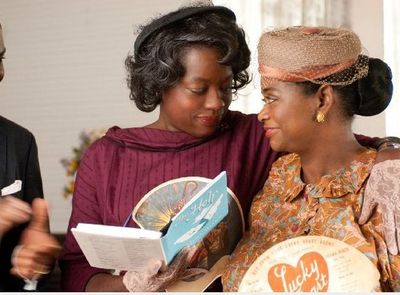
The Help, based on a book with the same name, was set in Jacksom Mississipi during the Civil Rights era. The connection betwwen two of the maids - the Help - especially stuck out to me after Dr. Corsini's discussion about the way we humans were designed to connect. One of the protagonist in the movie, Aibileen (who was telling the story), described the era as hell and said that her relationship with "God and Millie" helped her get through the turmoils and the death of her son.
Dr. Crabb in his book entitled Connecting suggests that God designed us to connect and that He has deposited within us the power to heal soul disease through connecting with eachother. Aibileen connected with God through prayer and within the church community. She also connected with Millie who was her friend. They talked, listened to one another and joked together. This type of connection helped her to find humor and laughter in her given situation. When they were feeling scared and insecure, Millie and Aibileen confided in eachother which produced healing and relief.

Another aspect that was highlighted by Dr. Crabb and was also depicted within the movie was Vision. Aibileen was told by her son that she would be a writer some day. When approached to tell her story Aibileen remembered that "vision" and this may have helped her in agreeing to do so even when it had been a very dangerous task. Dr. Crabb suggests that "when we connect with each other on the basis of a vision for who they are and what they could become," that power that is released can overcome fear, insecurity, and pride. The vision Aibileen got through connecting encouraged her to do something that would intiate change inspite of fears and insecurities.

Tuesday, November 8, 2011

Divorce on the Uptake


It comes as no shock that yet another Hollywood couple ended up in divorce. Kim Kardashian filed for divorce from her husband Kris Humphries last week. Whats most shocking about this divorce announcement is that it came only 72 days after the 10 million dollar marriage took place. The article states that she cited irreconcilable differences for the split. The media has been insinuating trouble in paradise ever for the couple ever since their August 20th marriage. While the media has spread numerous split rumors between the two, Kardashian herself made a statement on twitter confirming the divorce. A divorce between two Hollywood stars is nothing new, its almost as popular as weddings in Hollywood, sadly the trend isn't just in Hollywood, the divorce rate in the United States has skyrocketed within the past 10 years.
Divorce is not a new subject especially in America, it has become almost the new norm for marriages. However divorce goes against Gods original Blueprint which is being in perfect community and intimacy with God and one another. There are three aspects to this perfect intimacy that we discussed in class a couple of weeks ago. To have perfect intimacy we have to have the three aspects to intimacy all working in harmony, they are Emotional intimacy, physical intimacy, and spiritual intimacy. Due to the Fall we as mankind no longer have perfect community or intimacy with God or one another, and because of this disruption of the blue print we are experiences backfires in our relationships. Interpersonal relationships in our society are highly lacking because of this disconnect from God that we now have. As Christians we have a reconciliation with God through Christ who died for our sins, he now acts as a bridge to put us back into a harmonious relationship with God. However were still not at that perfect state, most specifically those who do not know Christ as their savior, because of that we have this gaping hole that we are trying to fill with superficial relationships with others. However, we cant have that perfect community with one another if we don't first have it with God.
While we all may have our own opinion about the Kardashian's, some even non existent, this article serves as a reminder of the norm when it comes to relationships in our country. Divorce is sadly becoming the norm for marriages, and this is largely in part because of our disconnect from our Lord, and from one another. I think that our emptiness due in part from this disconnect from God, even as Christians leads us to seek out any and all kinds of relationships. This leads to superficial relationships, based on how we as humans perceive them. These superficial relationships can manifest in many different ways, being close on a spiritual level in that you both know one another and God on a deeper level, but yet your lacking in the other two. Some of these superficial relationships can be based purely on sex, others can be deep on a emotional level in that that they are in tune to each others feelings, but yet they lack a connection of the others. Because we focus our relationships on one or two of these characteristics it leaves us vulnerable to unsatisfaction with ourselves and our significant others. In my opinion this is why there are so many divorces and unhappy marriages in our country. We settle on what we perceive to be fulfilling instead of praying, and letting God lead us into a relationship that is pleasing in his eyes.

Man's Means and God's Will For Perfection

"In our fles h dwells no good thing, but Christians are more than flesh." I would add to this that both Christians and the rest of humanity are more than flesh. Dr. Crabb's stance on therapies purpose correlates well with Dr. Corsini's basic premise in his course, COUN 507. This premise is that therapy for the Christian counselor has it's foundation in the understanding that apart from the Spirit and the healing hand of God, therapy is only putting a band-aid on a mortal wound.

When I was finishing up my senior year of undergraduate studies in psychology, I was impressed with all of the different personality and development theorists. I especially enjoyed the Humanistic school of thought regarding fully functioning person and self-actualization. In my opinion, these were the things that client's and really everyone should strive for. I believed that counseling should focus on the influence of interpersonal relationships on a client’s self-concept, and the demonstrate the importance of choice and self-direction in striving to reach one’s potential through guiding the client while letting them maintain autonomy. In a sense, I still feel this way. All of these things are important in the counseIor-client relationship. It seems evident to me that humanity has it within themselves to change who they are as an individual by altering aspects such as self-concept and self esteem and I also believe that humans have the ability to change where they are in life, whether it is their socioeconomic status or relationships.

However, eventually I began to think, or God was changing my perspective that humanism essentially asks too much of the wrong thing from people, a kind of self-imposed perfection. People can be irrational creatures and everyone has a fallen and sinful nature which leads to failure, especially when good behavior and a healthy persona is placed in our own hands. The concepts of self-actualization and a fully functioning person are excellent things to strive for but everyone will come short, even those that do achieve something like self-actualization and fully-functioning person will not indefinitely remain at such a state. Humanity falls short of perfection and individuals will constantly fall short of humanism’s ideal person. As a Christian, it is important to stress that the strength to change, overcome and find fulfillment is derived from God enhancing or enabling man's ability for psychological renewal, and not by man's ability alone. After all, it is meaningless to strive for and achieve perfection by man's standards and forfeit our eternal souls.

Friday, November 4, 2011

Hope for the Hurting


The realities of life for a Russian orphan are staggeringly bleak, and the number of abandoned children has skyrocketed over the last decade or so, for a complex mixture of reasons. Russia doesn't look after their abandoned children the way we in America are used to, by placing them in pre-screened, healthy, family homes. They still make use of large orphanages where dozens or even hundreds of children all live under the care of a few employees responsible for their oversight. Providing for the day-to-day physical needs of these children is tough enough; meeting their emotional needs is often simply not in the picture. This can have disastrous consequences. Of the roughly 700,000 orphans in the Russian system, sadly, only 10-20% will end up with any sort of a successfully life after they leave the orphanage at around 16-18 years old. A staggering 80-90% of them will fall victim to things like drug abuse, prostitution, prison, or suicide within the first three years of leaving the orphanage. There appears to be little hope for these children who seem to have started out life with the deck stacked horribly against them. But as you can read about in this article, some of God's people have heard the cries of these children and are stepping in to try to make a difference. Through their efforts, they are attempting to share love with these hurting children and mentor them through the challenges of their young lives. Although it remains to be seen what the long term results of their investment will be, certainly their willingness to do what they can to try to solve an obvious problem brings honor to God and is to be lauded.


We recently discussed Attachment Theory in class. It deals with how infants up to around 18-24 months old develop and learn from relationships with their primary caregiver- usually their mother. Babies seem to learn from healthy interaction with mom that they are safe and they can explore their world and function and grow. Ideas such as "I am worthy of love" and "important people in my life are trustworthy" seem to be solidified by mothers consistently meeting the babies' basic physical and emotional needs. But when the basic needs of a baby are not consistently met, the person usually responds to life through either anxiety or avoidance. They will tend to cling to anyone who provides the slightest bit of stability for them or they will hide behind emotional walls so they won't be hurt by people. Either of these are unhealthy and can lead to relational disaster. Unfortunately, the orphans from Russia seem to overwhelmingly live out this negative aspect of attachment.


I was somewhat familiar with the plight of Russian orphans prior to our recent class discussion and couldn't avoid relating what we were learning to their plight. I had read articles and watched television shows concerning the challenges faced by these children. I even had a short discussion with a middle-aged guy who was adopted from one of those orphanages in Russia when he was a child. There are some very heartbreaking stories of many people who have invested a lot of time, effort and love into the lives of these orphans, oftentimes, apparently to no avail. The child still acts out in monstrous ways, gets into serious trouble with the law as a teen, and ends up a cold, distant, "emotionally dead" person stumbling through their way through life. I have bumped into glaringly few bright spots concerning this issue. I'm embarrassed to admit that even when I read a hopeful article like the one above, my first fleshly response is "What difference can a few people investing a few hours a week possibly make in relation to so large a problem?" Thankfully, in this case, my mind quickly transitions to principles from the bible clearly displaying God's love for "orphans" and "the fatherless." I don't fully understand it, but somehow, God has a special place for these people in His heart and is using His followers to show them this. In fact, this whole idea of people who grew up in rough situations has spurred me on to try something new. I've recently been feeling a drive to look into whatever local prison ministries there might be around our area that I could get involved with. I must confess to a bit of apprehension due to a feeling of "Do I really have anything to offer?" But I have faith that God can and will use me to make a difference in someone's life. Just a couple days ago I got the email and phone number for some guys already involved in local prison ministry, and I plan on contacting them to see how I might get involved. It is truly an honor to serve our awesome God in whatever ways He has enabled us and I don't want to take it for granted. I'm excited to think about God using me to help some person who might not have had much unconditional love shown to them in their lives. I'd love to hear from any of you with experience in this area, or in other areas where you've stepped out to try to make a difference in someone's life.

Thursday, November 3, 2011

Hakuna Matata


Recently, Disney re-released the movie, “The Lion King,” a classic favorite for practically any child born after 1994. This movie has to be one of my all-time favorites and you can draw so many analogies from this movie concerning life. One in particular that I find relevant is the song, “Hakuna Matata;” this song is coined from the Swahili phrase which means “there are no worries.”

In class, we just finished reading the book, “The Anxiety Cure.” In this book, Hart discusses how overstressed lives pave the way to anxiety, and that anxiety and worry are serious risks for one’s overall well-being. Hart claims that we all have anxiety to some degree, and it is important to have some anxiety so that we are motivated to accomplish tasks. However, sometimes anxiety gets out of hand and can cause mental, emotional, and biological damage.

Much of anxiety is due to stress; and for many of us, stress is due to a fast paced and overstressed lifestyle. Moments of stress are inevitable, especially in today’s society; however stress should not become a lifestyle. At some points we need to take a little advice from a Disney classic and slow down. Obviously, we cannot permanently adopt an “Hakuna Matata” lifestyle, because we have responsibilities; but there are moments when each of us needs to learn to relax, breathe, and enjoy the life God has given us.

Wednesday, November 2, 2011

Attachment theory, Politics, and Everything Else


In class we dove into the subject of Attachment theory and worked our way to how that affects our view and understanding of God. It was incredibly shocking to me that the actions of one’s caregiver in the first 18 months of life have a major impact on the rest of the individual’s life. This places a huge burden on any parent and makes their job that much more important. As a matter of fact, I was rather frustrated at the whole idea and felt helpless in light of it. It makes a great deal of sense when you consider that we really do not know anything when we are born but its hard to believe that we have so little control over the development of our personalities. In the same light, our relationship with others also lays the ground work for our relationship with God. When I considered this, I immediately set out to find some discussion on this recent news and stumbled across an article in the USA Today in 2006. While it is a bit dated it gives a tangible picture of faith in the United States and correlates one’s view of God to his or her values in politics. The article discusses the beliefs of Americans in areas that are disputed between denominations and those that are agreed upon and also highlights four major views of God. The article goes on to connect these major views of God with and what each group subsequently values in politics.

This article intrigued me for a number of reasons, the primary reason being its connection to our class discussion last Thursday. In class we started out by laying the groundwork for attachment theory and worked our way to God attachment. It blew my mind how much impact those first 18 months had and had it stopped there I would have been flabbergasted, but it didn’t. From our views of God, we can take the next step and break down our views in politics, as discussed in the article. The fact is childhood attachment to our caregivers affects just about everything. The more I think about the theory, the more it connects my entire life. All this time I’ve been under the impression that I am who I am because of my choices, and I am my own person. While I can examine some aspects of “me” and take credit for them, I can only trace these back so far before I run back to the true source. This source being the groundwork for any schema or framework I would build upon for the rest of my life. In our infancy, we are completely dependent upon our caregivers to show us what relationships look like and to meet our needs. This makes it completely logical to conclude that we will see the world through that schema for the rest of our lives. Our worldview, beliefs, mindsets, outlook on life, motivation, etc., are all based on the foundation are parents laid for us. I chose the picture of a chain because it symbolizes the connection between each and every one of our beliefs. In the past, I've seen my beliefs as based on unique and separate situations and circumstances in my life but now I see them as the result of each and every belief before it.

The challenge and conclusion I came to after reading this article has lead me to question why we believe what we believe in every context. In knowing why I think and feel the way I do, I can better understand myself and I can work on changing the thought patterns and behaviors that are not based on truth, and are not healthy for me. I can also try to do the same for others and meet them where they are. When you consider why someone acts the way they do or believes what they believe from the perspective of attachment theory, it is easier to understand them and help them change. When we know the true root of anything we can stop treating the symptoms and instead treat the cause. Attachment theory also forces us to evaluate our true beliefs about God and, once we know our expectations of God, it allows us to grow closer to Him. To truly grow closer to God we have to determine what our basest beliefs about him are. Only then will we be able to shed the lies we believe about God and walk freely in His love and grace. When we see God as a disappointed judge, a wrathful oppressor, a distant and unloving being, or non-existent we are not seeing Him through the truth, but instead through the false schemas that our parents have unknowingly given us. We are not destined to live like this forever but can instead break the cycle by abandoning our misconceptions and embracing His truth.

Did attachment theory rock your world too? How does your view of God affect your walk with Him?

An Assist from "The Help"

The movie The Help has a major racial prejudice theme that overrides a powerful sub theme on parenting styles. Set in the 1960s in Jackson, Mississippi, The Help is a classic story of pre-desegregation domestic life in the Deep South. The movie is based on the novel written by Kathyrn Stockett who was inspired by her Mississippi up-bringing. She thrusts the southern cultural practice of wealthy white housewives employing African American house-keeping nannies into the spotlight of a compelling story. The characterizations are strong. In the film Aibileen, more mother than house-keeper, cares for an infant daughter of detached white mother. Her character is central to the powerful sub theme of a dysfunctional parenting practices. The movie implies that this particular mother has suffered from post-partum depression and Aibileen is making up for her deficiencies. This relationship adds emphasis to this dysfunctional cultural reality throughout the movie. At one point Aibileen is seen performing a nurturing ritual of tenderly whispering to the small child that she is, among other things, "kind and smart."

Dr. Corsini gave us an overview of attachment theory as it relates not only to relational development but also to spiritual development. He acknowledged that attachment theory asserts that how formative relational questions are answered during the first 18 months of our lives dictates how we will form and respond to relationships as adults. There were two basic questions we discussed that form the internal working model for relational development for every infant. The first question is focused on self- "Am I worthy of care and capable of getting help?" The second question is others centered- "Are you trustworthy and can I rely on you to care for me when I need it?" Our discussion focused on four styles of relating that stem from an infant's experience with getting these questions answered. The triangularized parenting relationship in the movie showed a child who could not get her needs met by her mother but found a willing and able care-giver in 'the help', Aibileen. You can see the confidence the child had in Aibileen; as long as she was around her needs would be met. The moments of harsh correction from her mother encourage the child to exhibit an avoidant style when relating to her. At the climax of the movie there is a heart-wrenching moment when Aibileen is reciting a nurturing word ritual with the child, for apparently the last time. As she leaves the home in tears the child, who appears to be between 18 and 24 months old, begs her not to go.

My questions, as I reviewed this movie through the lens of attachment theory, were centered on how this loss would affect this child's relational style. I wondered if the forming had taken shape developmentally due to her age. The child's questions had been answered consistently with affirmation for her whole life. I wonder if the 18 month developmental timeline would prove valid or would her experiences with a detached mother move her to an avoidant or ambivalent style? As I move to view this topic through a biblical world view I marvel at the inter-play between our dependent response to God and how our parents cared for us when we were utterly dependent on them. God Attachment theory has fascinating conclusions to explore. As I consider the gospel's depiction of those who received from Jesus Christ, I am reminded of vivid accounts of men and women who were aware that they could not meet their needs. They risked ridicule, careers and reputation to publicly run to Him, trusting that their needs would be met. It is fascinating to consider the influence of nurture received during the first 18 months of life as the determination factor for that kind of response. The more indicative aspect discussed in class, pertaining to God Attachment, was the biblical concept that God is the pursuer; which gives us hope if we are troubled by our own attachment driven relational style.

I will not forget

The Island of Cyprus was invaded by Turkey in 1974, and to this day the island remains divided. During the invasion, Turkey took about 35-40% of the island and forced any Cypriots (people from Cyprus) to leave their homes. Within a few weeks, 160,000-200,000 people were refugees in their own country. There are people alive today that still remember where their homes are, but they are now occupied by other families that migrated in from Turkey. The picture above is a representation of the area that Turkey currently occupies, and the words above are Greek and read "I will not forget". To this day, there is a huge Turkish flag that has been created by Turkey on the side of a mountain overlooking Nicosia (the capital of Cyprus). The image is visible during the day and lights up at night. This is an enormous reminder to all the people in Cyprus that they have been robbed .
In class, we have been learning of the atrocities carried out in Rwanda in 1994 by the Hutu people against the Tutsi people. The stories are heartbreaking to hear of entire families wiped out by neighbors and friends. We watched a DVD that showed how President Paul Kagam authorized the release of prisoners that had taken part in the genocide. Not only were these prisoners released, but they went back and lived in their houses. Some of these criminals were the ones who had murdered their neighbors. The film displayed the miraculous healing that the church is facilitating. People are finding forgiveness, and through that forgiveness, they are finding freedom and, remarkably, reconciliation. The process is heart-wrenching for both victim and victimizer, but the results are divinely beautiful.
As I think about growing up in Cyprus, there is so much hate and bitterness. The people feel wronged and they are entirely right. They were robbed and they know it. I feel like that is what makes the issue so hard to solve. The people will not let go of their right to be victims. I see what is happening in Rwanda and I pray God would work in the people of Cyprus. So many people do not know God there, and I see how it is hurting them. I have had to consciously apply the gospel into how I think of the Turkish people. It feels good to be on the "poor victim" team, but the hate and bitterness that comes with it are not what God has for us. How Jesus changes our perspective is beautiful.

See, from his head, his hands, his feet,
sorrow and love flow mingled down.
Did e'er such love and sorrow meet,
or thorns compose so rich a crown.

Were the whole realm of nature mine,
that were an offering far too small;
love so amazing, so divine,
demands my soul, my life, my all.